
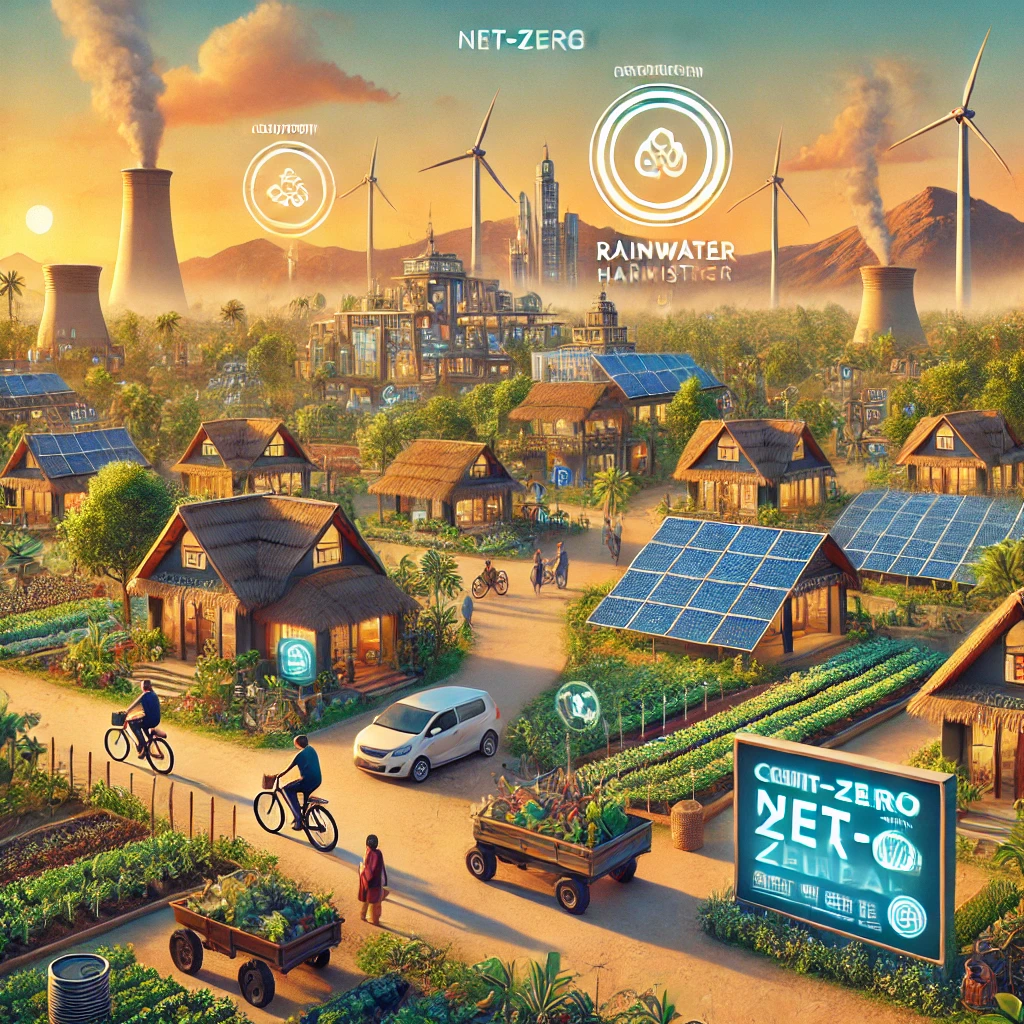
A Net Zero Village is an innovative model of rural development that focuses on achieving net-zero carbon emissions by balancing energy consumption with renewable energy generation while promoting sustainable livelihoods. This approach not only mitigates climate change but also enhances the well-being of rural communities by integrating clean energy solutions, efficient resource management, and circular economy principles.
Key Features of a Net Zero Village
- Renewable Energy Adoption
- Installation of solar microgrids and biogas plants to power homes, schools, and businesses.
- Use of wind and hydro energy where feasible to supplement power generation.
- Deployment of energy-efficient appliances and LED lighting to reduce power consumption.
- Sustainable Water Management
- Rainwater harvesting systems to ensure water security.
- Drip irrigation and smart water management to optimize agricultural productivity.
- Wastewater recycling and greywater treatment for reuse in farming and sanitation.
- Green Infrastructure and Eco-Friendly Construction
- Use of locally sourced, low-carbon materials for housing and community structures.
- Promotion of green roofs, vertical gardens, and afforestation to enhance biodiversity.
- Development of climate-resilient housing to withstand extreme weather conditions.
- Carbon Neutral Agriculture and Circular Economy
- Promotion of organic farming and agroforestry to enhance soil health.
- Use of biofertilizers, composting, and permaculture to reduce chemical inputs.
- Waste-to-energy initiatives such as biogas production from agricultural waste.
- Smart Waste Management and Recycling
- Implementation of zero-waste policies, ensuring segregation and recycling.
- Use of plastic waste for eco-friendly products and road construction.
- Community-driven waste collection programs to promote responsible consumption.
- Digital and Smart Solutions for Sustainability
- IoT-based monitoring systems for energy and resource tracking.
- AI-powered weather predictions to help farmers adapt to climate change.
- Integration of digital literacy programs and telemedicine services for inclusive growth.
Impact of Net Zero Villages
- Carbon Neutrality: Reduction in carbon emissions through clean energy and eco-friendly practices.
- Energy Independence: Villages generate their own electricity, reducing dependence on fossil fuels.
- Improved Livelihoods: Sustainable agricultural practices and green jobs boost rural incomes.
- Climate Resilience: Adaptation to climate challenges through water conservation and eco-friendly infrastructure.
- Healthier Communities: Reduced pollution, improved sanitation, and better access to healthcare.
Conclusion
Net Zero Villages represent the future of sustainable rural development, demonstrating that economic growth and environmental responsibility can go hand in hand. By adopting clean energy, smart agriculture, digital solutions, and sustainable waste management, villages can thrive while contributing to India’s climate action goals and the United Nations Sustainable Development Goals (SDGs).
Investing in Net Zero Villages is not just about reducing emissions; it is about creating self-sufficient, climate-resilient communities that can serve as models for a sustainable future.

